
THE GEMHOOD EDITORIAL LIBRARY
Dumortierite gemstone guide
Dumortierite may occur as blue fibrous aggregates or as blue inclusions within quartz sold as dumortierite quartz. Confirm whether a piece is dumortierite itself or quartz containing it, as the distinction changes appearance and hardness.
Gem facts · Quality considerations · Care & meaning
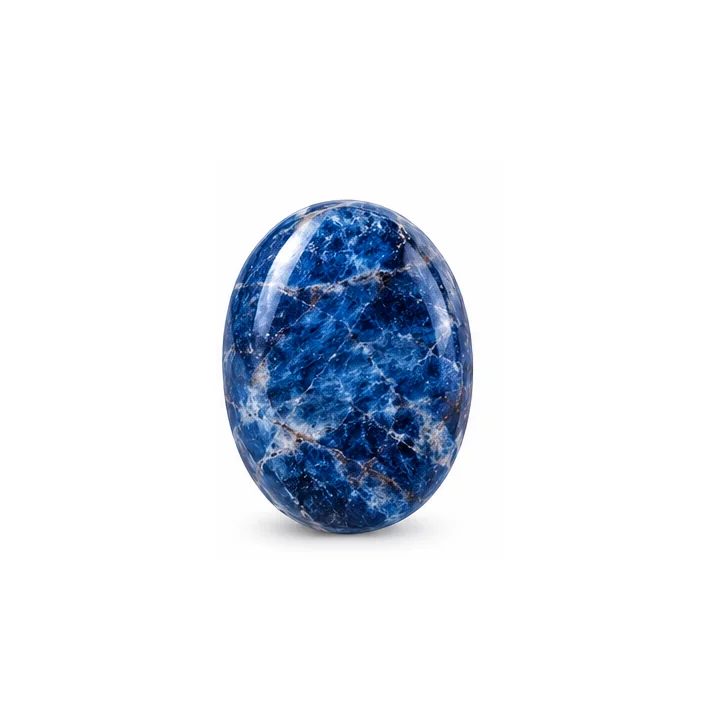 A study in colour and character
Every shade has a story.
Typical appearances for Dumortierite. Natural stones vary, and lighting or treatment can change their appearance.
Where Dumortierite is found
Brazil; Madagascar
 Brazil
 Madagascar
These are representative geological or commercial sources, not certified provenance for an individual stone. Country of origin should be substantiated independently when relevant to value.
01 / THE GEM AT A GLANCE
What is Dumortierite?
Dumortierite is a naturally occurring aluminium borosilicate represented by Al₇BO₃(SiO₄)₃O₃ (ideal anhydrous end-member), with a reported Mohs hardness of 7–8. It commonly appears as Dense radiating clusters of fine dark cobalt-blue to violet-blue fibrous crystals embedded in pale quartz-rich matrix. Its documented colours include Blue, violet-blue, indigo, greenish blue, pink, red. Crystallises in aluminium-rich metamorphic rocks and some boron-rich pegmatites and hydrothermal systems.
Dumortierite may occur as blue fibrous aggregates or as blue inclusions within quartz sold as dumortierite quartz. Typical material appears in denim blue, violet-blue and brown shades, and is commonly described as aluminium borosilicate mineral. The Mohs hardness for this material is approximately 7–8.5; hardness refers to resistance to scratching, not to breaking, cleavage or sensitivity to chemicals. Confirm whether a piece is dumortierite itself or quartz containing it, as the distinction changes appearance and hardness. Typical geological or commercial source regions include Brazil; Madagascar; this does not establish the provenance of an individual gem. Wipe gently and avoid harsh abrasives; for included quartz, use normal quartz-safe hand cleaning. Ask for confirmation of identity, natural or lab-created status, and any treatments when choosing an individual stone.
02 / LOOK CLOSER
Colour, appearance and quality
Typical specimen appearance: Dense radiating clusters of fine dark cobalt-blue to violet-blue fibrous crystals embedded in pale quartz-rich matrix. Reported reference localities include France; Brazil; Madagascar; United States. These are general occurrence areas, not proof of origin for any photographed or offered specimen.
Before you choose a stone
Compare images taken in more than one lighting condition, ask for views of the actual item and check how the cut and setting change its appearance. A gemstone type is not a standard grade: each natural specimen has its own colour, inclusions and workmanship.
THE GEMHOOD BUYER'S FIELD NOTES
How to choose Dumortierite: three checks
- 01
Dumortierite-rich quartz is often marketed as blue quartz; identify inclusions and distinguish sodalite, lazulite, blue tourmaline and dyed quartz with testing.
- 02
Check condition, actual photos, species and locality documentation, measurements and any treatment. The simplified formula is for an ideal end-member; hydroxyl substitution can make real composition more complex.
Fine mineral fibres and polishing dust should not be inhaled; do not dry-grind or inhale cut-off residue.
Compact material may appear in carvings or polished pieces, but fibres and fracture-prone natural aggregates require cautious protected use.
These notes describe typical gem material and trade practices. They do not independently grade or identify a specific item offered for sale.
03 / BUY WITH CONFIDENCE
Natural, laboratory-grown, treated or imitation?
Dumortierite-rich quartz is often marketed as blue quartz; identify inclusions and distinguish sodalite, lazulite, blue tourmaline and dyed quartz with testing. The simplified formula is for an ideal end-member; hydroxyl substitution can make real composition more complex. Require photographs of the exact object, scale, an accurate species label, evidence of any claimed locality, and disclosure of treatment, repairs and synthetic or coated substitutes.
These distinctions should be clear in the listing for any particular gem. Treatments are not automatically unacceptable, but an undisclosed treatment, vague mineral identity or unsupported origin claim prevents an informed purchase. Where material identity materially affects value, an independent gemological identification report may be worth considering.
A CLOSER LOOK
Composition, hardness and crystal science
Dumortierite is a naturally occurring aluminium borosilicate represented by Al₇BO₃(SiO₄)₃O₃ (ideal anhydrous end-member), with a reported Mohs hardness of 7–8. It commonly appears as Dense radiating clusters of fine dark cobalt-blue to violet-blue fibrous crystals embedded in pale quartz-rich matrix. Its documented colours include Blue, violet-blue, indigo, greenish blue, pink, red. Crystallises in aluminium-rich metamorphic rocks and some boron-rich pegmatites and hydrothermal systems.
The formula Al₇BO₃(SiO₄)₃O₃ (ideal anhydrous end-member) is representative, and impurities or compositional substitution may vary with the geological occurrence. A Mohs rating of 7–8 measures scratch resistance only; inspect cleavage, crystal terminations and mechanical fragility separately.
A CLOSER LOOK
Appearance, colour and typical crystal habit
Dumortierite is described by Dense radiating clusters of fine dark cobalt-blue to violet-blue fibrous crystals embedded in pale quartz-rich matrix. Reported colours include Blue, violet-blue, indigo, greenish blue, pink, red.
Dumortierite-rich quartz is often marketed as blue quartz; identify inclusions and distinguish sodalite, lazulite, blue tourmaline and dyed quartz with testing. The simplified formula is for an ideal end-member; hydroxyl substitution can make real composition more complex. Require photographs of the exact object, scale, an accurate species label, evidence of any claimed locality, and disclosure of treatment, repairs and synthetic or coated substitutes.
A CLOSER LOOK
Geological formation and host-rock setting
Crystallises in aluminium-rich metamorphic rocks and some boron-rich pegmatites and hydrothermal systems
Reference occurrence areas: France; Brazil; Madagascar; United States. Reported reference localities, not independently verified provenance for a listed product. A location on a generic educational page is not the same as a documented specimen chain of custody.
A CLOSER LOOK
History, nomenclature and frequently mistaken species
Named in honour of French palaeontologist Eugène Dumortier.
The simplified formula is for an ideal end-member; hydroxyl substitution can make real composition more complex.
Compare visually similar materials such as sodalite; lazulite; dyed quartz. A visual match is only a starting point, not mineralogical authentication.
A CLOSER LOOK
Identification and trustworthy mineral buying
Dumortierite-rich quartz is often marketed as blue quartz; identify inclusions and distinguish sodalite, lazulite, blue tourmaline and dyed quartz with testing. The simplified formula is for an ideal end-member; hydroxyl substitution can make real composition more complex. Require photographs of the exact object, scale, an accurate species label, evidence of any claimed locality, and disclosure of treatment, repairs and synthetic or coated substitutes.
Ask for actual measured dimensions and multiple current photos; confirm any restoration, colouring, backing, polished surface or matrix attachment. For expensive material, request a trusted independent opinion rather than relying on promotional images.
A CLOSER LOOK
Collection display and suitability for jewellery
Compact material may appear in carvings or polished pieces, but fibres and fracture-prone natural aggregates require cautious protected use. The GemHood picture is a generated educational illustration; it is not an authenticated specimen, laboratory result or sale item.
Transport specimens in individual padded boxes; support loose blades, fans or plates from beneath their host matrix, and never rely solely on the Mohs rating to decide how the specimen should be worn.
A CLOSER LOOK
Cleaning, stability and collector safety
Fine mineral fibres and polishing dust should not be inhaled; do not dry-grind or inhale cut-off residue. Use a soft damp cloth for robust polished material only, keeping natural fibrous specimens dry; avoid harsh acid cleaners and abrasive brushing.
Use the least aggressive cleaning method that preserves the species and any associated matrix. Avoid ultrasonic and steam cleaning for fragile, altered, repaired or unknown specimens; wash hands after handling mineral dust or metal-bearing samples.
A CLOSER LOOK
Understanding the GemHood mineral illustration
The illustration is intended to suggest Rich indigo fibrous fans and long slender inclusions on pale cream quartz-rich matrix.
This is an original educational depiction, not an authenticated specimen photograph, lab finding or purchasable product. Natural examples differ substantially in shape and colour; do not use the illustration to establish species, treatment or provenance.
04 / WEAR IT WELL
Dumortierite in jewellery
Compact material may appear in carvings or polished pieces, but fibres and fracture-prone natural aggregates require cautious protected use. The GemHood picture is a generated educational illustration; it is not an authenticated specimen, laboratory result or sale item.
05 / MAKE IT LAST
How to care for Dumortierite
Fine mineral fibres and polishing dust should not be inhaled; do not dry-grind or inhale cut-off residue. Use a soft damp cloth for robust polished material only, keeping natural fibrous specimens dry; avoid harsh acid cleaners and abrasive brushing.
One essential care distinction
Mohs hardness describes resistance to scratching, not resistance to breaking. Gemstones with cleavage, existing fractures, porous surfaces or fillings can need extra care regardless of their hardness number. If you do not know whether a piece has been treated, begin with the gentlest appropriate cleaning method.
06 / CULTURE & MEANING
History, heritage and symbolism
Named in honour of French palaeontologist Eugène Dumortier.
Dumortierite is included in this educational directory for its distinctive material, appearance and cultural or collector interest. Dumortierite may occur as blue fibrous aggregates or as blue inclusions within quartz sold as dumortierite quartz. Gem varieties and trade names can overlap: the precise identity of a particular specimen should be independently confirmed when relevant.
Traditional meanings and spiritual associations are part of cultural storytelling. They are not evidence that a gemstone diagnoses, prevents or treats any medical condition.
GOOD QUESTIONS, CLEAR ANSWERS
Dumortierite FAQs
What is Dumortierite?
Dumortierite is a aluminium borosilicate, commonly represented by Al₇BO₃(SiO₄)₃O₃ (ideal anhydrous end-member). Typical appearance includes Dense radiating clusters of fine dark cobalt-blue to violet-blue fibrous crystals embedded in pale quartz-rich matrix.
How hard is Dumortierite?
A typical reported Mohs hardness is 7–8. Scratching resistance does not measure toughness, cleavage, safety or suitability for everyday wear.
What colour is natural Dumortierite?
Reported colours include Blue, violet-blue, indigo, greenish blue, pink, red. Lighting, matrix, mineral impurities and display settings can affect perceived colour.
Where does Dumortierite form?
Crystallises in aluminium-rich metamorphic rocks and some boron-rich pegmatites and hydrothermal systems Published occurrence areas include France; Brazil; Madagascar; United States, but these do not establish a sale item’s actual origin.
How can I identify Dumortierite?
Dumortierite-rich quartz is often marketed as blue quartz; identify inclusions and distinguish sodalite, lazulite, blue tourmaline and dyed quartz with testing. A mineral specialist may need to examine the particular specimen.
Can Dumortierite be used for jewellery?
Compact material may appear in carvings or polished pieces, but fibres and fracture-prone natural aggregates require cautious protected use.
How should I clean Dumortierite?
Use a soft damp cloth for robust polished material only, keeping natural fibrous specimens dry; avoid harsh acid cleaners and abrasive brushing.
Is Dumortierite safe to handle?
Fine mineral fibres and polishing dust should not be inhaled; do not dry-grind or inhale cut-off residue.
Is the GemHood Dumortierite picture a real specimen?
No. It is an original generated educational illustration designed around typical Dumortierite appearances. It is not a certified specimen photo, laboratory determination or a product for sale.
Which minerals can be confused with Dumortierite?
Possible lookalikes include sodalite; lazulite; dyed quartz. The simplified formula is for an ideal end-member; hydroxyl substitution can make real composition more complex.
A NOTE FROM THE GEMHOOD EDITORIAL DESK
How to use this guide
We explain gemstone properties, known mining regions and customary treatments to help you shop more confidently. Each gemstone can vary in quality and individual provenance, so compare the actual jewellery listing and request supporting documentation if origin, treatment or natural-versus-laboratory-grown status affects your choice.
Our gemstone library is educational and does not act as a laboratory identification certificate. Independent gemological assessment is advisable for valuable or disputed claims.
EDITORIAL REFERENCES
Research and further reading
References describe mineral species and representative occurrences, not verification of any individual item for sale.
No matching jewellery is currently in stock. Explore the guide or browse our full collection.
Browse jewellery →UNDERSTAND THE DIFFERENCE
Compare Dumortierite with similar gemstones
These stones can overlap in colour, appearance or jewellery use. The mineral identity, treatments and durability may be very different.
KEEP EXPLORING
Other gemstones to discover
Educational articles describe gemstone types and common trade practices. They are not individual gemological certificates, current price appraisals or medical advice.