
THE GEMHOOD EDITORIAL LIBRARY
Cobalt-bearing Calcite gemstone guide
Cobalt-bearing calcite is a colourful pink variety of calcite, commonly prized as sparkling rhombohedral collector crystals.
Gem facts · Quality considerations · Care & meaning
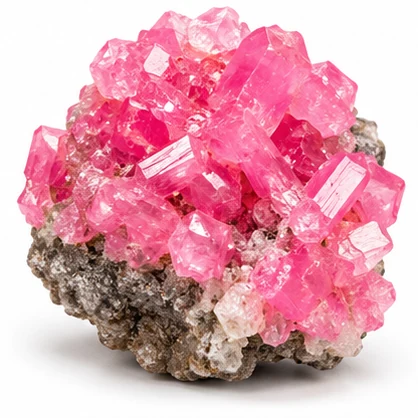 A study in colour and character
Every shade has a story.
Typical appearances for Cobalt-bearing Calcite. Natural stones vary, and lighting or treatment can change their appearance.
Where Cobalt-bearing Calcite is found
Democratic Republic of the Congo; Morocco
 Democratic Republic of the Congo
 Morocco
How it forms
Calcite has prominent cleavage and reacts with acids, so bright pink crystals must be treated delicately. Cobalt-bearing colours range from subtle blush to saturated magenta, but a vivid photograph is not proof of cobalt content.
These are representative geological or commercial sources, not certified provenance for an individual stone. Country of origin should be substantiated independently when relevant to value.
01 / THE GEM AT A GLANCE
What is Cobalt-bearing Calcite?
Calcite has prominent cleavage and reacts with acids, so bright pink crystals must be treated delicately. Cobalt-bearing colours range from subtle blush to saturated magenta, but a vivid photograph is not proof of cobalt content. Typical colours include rose pink, fuchsia, with a reported Mohs hardness of 3. This material is described as cobalt-bearing variety of calcite; exact identification requires mineralogical evidence, not colour alone.
Composition: CaCO₃ with Co substitution. Scientific properties apply to the mineral or gem type, not as a guarantee about an untested individual product.
Cobalt-bearing calcite is a colourful pink variety of calcite, commonly prized as sparkling rhombohedral collector crystals. Calcite has prominent cleavage and reacts with acids, so bright pink crystals must be treated delicately. Cobalt-bearing colours range from subtle blush to saturated magenta, but a vivid photograph is not proof of cobalt content. Ask for untreated colour, crystal condition and mineral identification, and whether the piece has any glue or resin repairs. This is a variety of calcite rather than a separate accepted mineral species; avoid false species claims. Representative reported occurrences include Democratic Republic of the Congo; Morocco. A country or region is not evidence of the provenance of an individual specimen. Collector display; scratches and acid sensitivity make everyday wear impractical. Avoid vinegar, acidic cleaners and abrasion; keep crystals dry after gentle cleaning. This guide concerns the material generally and is not a certification of any product for sale. The companion picture is an AI-generated educational illustration, not a verified specimen photo. Ask for close-up images, correct species or variety naming, accurate dimensions and disclosure of any repairs, coatings, dyeing or stabilisation before purchase.
02 / LOOK CLOSER
Colour, appearance and quality
Ask for untreated colour, crystal condition and mineral identification, and whether the piece has any glue or resin repairs. Representative reported occurrences include Democratic Republic of the Congo; Morocco. A country or region is not evidence of the provenance of an individual specimen. Good collector value depends on the actual condition, colour, size, authenticity, transparency or crystal habit, not simply a saturated website photograph.
Before you choose a stone
Compare images taken in more than one lighting condition, ask for views of the actual item and check how the cut and setting change its appearance. A gemstone type is not a standard grade: each natural specimen has its own colour, inclusions and workmanship.
THE GEMHOOD BUYER'S FIELD NOTES
How to choose Cobalt-bearing Calcite: three checks
- 01
This is a variety of calcite rather than a separate accepted mineral species; avoid false species claims.
- 02
Ask for untreated colour, crystal condition and mineral identification, and whether the piece has any glue or resin repairs.
- 03
Confirm seller treatment and repairs disclosures, precise scale and return conditions.
This is a variety of calcite rather than a separate accepted mineral species; avoid false species claims.
Collector display; scratches and acid sensitivity make everyday wear impractical.
These notes describe typical gem material and trade practices. They do not independently grade or identify a specific item offered for sale.
03 / BUY WITH CONFIDENCE
Natural, laboratory-grown, treated or imitation?
This is a variety of calcite rather than a separate accepted mineral species; avoid false species claims. Ask for untreated colour, crystal condition and mineral identification, and whether the piece has any glue or resin repairs. Ask whether the photographed stone is the exact item supplied; specimen photographs and AI illustrations cannot prove an individual mineral identity.
These distinctions should be clear in the listing for any particular gem. Treatments are not automatically unacceptable, but an undisclosed treatment, vague mineral identity or unsupported origin claim prevents an informed purchase. Where material identity materially affects value, an independent gemological identification report may be worth considering.
A CLOSER LOOK
What makes this material recognisable
Calcite has prominent cleavage and reacts with acids, so bright pink crystals must be treated delicately. Cobalt-bearing colours range from subtle blush to saturated magenta, but a vivid photograph is not proof of cobalt content. Its reported colours include rose pink, fuchsia, but some minerals share similar appearances. Documenting crystal habit, size, lustre, and any visible zoning is more useful than relying on a single colour label.
Ask for untreated colour, crystal condition and mineral identification, and whether the piece has any glue or resin repairs. A natural or edited studio image can exaggerate lustre and hide surface damage; review the actual specimen from multiple angles.
A CLOSER LOOK
Buying, handling and realistic uses
This is a variety of calcite rather than a separate accepted mineral species; avoid false species claims. Representative reported occurrences include Democratic Republic of the Congo; Morocco. A country or region is not evidence of the provenance of an individual specimen.
Collector display; scratches and acid sensitivity make everyday wear impractical. Avoid vinegar, acidic cleaners and abrasion; keep crystals dry after gentle cleaning. A professional identification and item-specific disclosure are the best safeguards when buying rare minerals.
04 / WEAR IT WELL
Cobalt-bearing Calcite in jewellery
Collector display; scratches and acid sensitivity make everyday wear impractical. Its reported Mohs hardness is 3, but toughness and cleavage also determine suitability.
05 / MAKE IT LAST
How to care for Cobalt-bearing Calcite
Avoid vinegar, acidic cleaners and abrasion; keep crystals dry after gentle cleaning. Store separately from harder stones and ask a professional before cleaning valuable or fragile mounted specimens.
One essential care distinction
Mohs hardness describes resistance to scratching, not resistance to breaking. Gemstones with cleavage, existing fractures, porous surfaces or fillings can need extra care regardless of their hardness number. If you do not know whether a piece has been treated, begin with the gentlest appropriate cleaning method.
06 / CULTURE & MEANING
History, heritage and symbolism
Pink colour arises in some specimens when cobalt substitutes into calcite’s structure. Geological localities are references to mineral occurrences, not mine-of-origin guarantees.
Traditional meanings and spiritual associations are part of cultural storytelling. They are not evidence that a gemstone diagnoses, prevents or treats any medical condition.
GOOD QUESTIONS, CLEAR ANSWERS
Cobalt-bearing Calcite FAQs
What is Cobalt-bearing Calcite?
Calcite has prominent cleavage and reacts with acids, so bright pink crystals must be treated delicately. Cobalt-bearing colours range from subtle blush to saturated magenta, but a vivid photograph is not proof of cobalt content.
How hard is Cobalt-bearing Calcite?
The reported Mohs hardness is 3. Cleavage and toughness also affect wearability.
Where is Cobalt-bearing Calcite found?
Representative reported occurrences include Democratic Republic of the Congo; Morocco. A country or region is not evidence of the provenance of an individual specimen.
Can Cobalt-bearing Calcite be worn as jewellery?
Collector display; scratches and acid sensitivity make everyday wear impractical.
How should Cobalt-bearing Calcite be cleaned?
Avoid vinegar, acidic cleaners and abrasion; keep crystals dry after gentle cleaning.
A NOTE FROM THE GEMHOOD EDITORIAL DESK
How to use this guide
We explain gemstone properties, known mining regions and customary treatments to help you shop more confidently. Each gemstone can vary in quality and individual provenance, so compare the actual jewellery listing and request supporting documentation if origin, treatment or natural-versus-laboratory-grown status affects your choice.
Our gemstone library is educational and does not act as a laboratory identification certificate. Independent gemological assessment is advisable for valuable or disputed claims.
EDITORIAL REFERENCES
Research and further reading
References describe mineral species and representative occurrences, not verification of any individual item for sale.
No matching jewellery is currently in stock. Explore the guide or browse our full collection.
Browse jewellery →UNDERSTAND THE DIFFERENCE
Compare Cobalt-bearing Calcite with similar gemstones
These stones can overlap in colour, appearance or jewellery use. The mineral identity, treatments and durability may be very different.
KEEP EXPLORING
Other gemstones to discover
Educational articles describe gemstone types and common trade practices. They are not individual gemological certificates, current price appraisals or medical advice.