
THE GEMHOOD EDITORIAL LIBRARY
Beryllonite gemstone guide
Discover Beryllonite, a anhydrous sodium–beryllium phosphate known for rare colourless pegmatite phosphate. See verified-reference properties and specimen care advice.
Gem facts · Quality considerations · Care & meaning
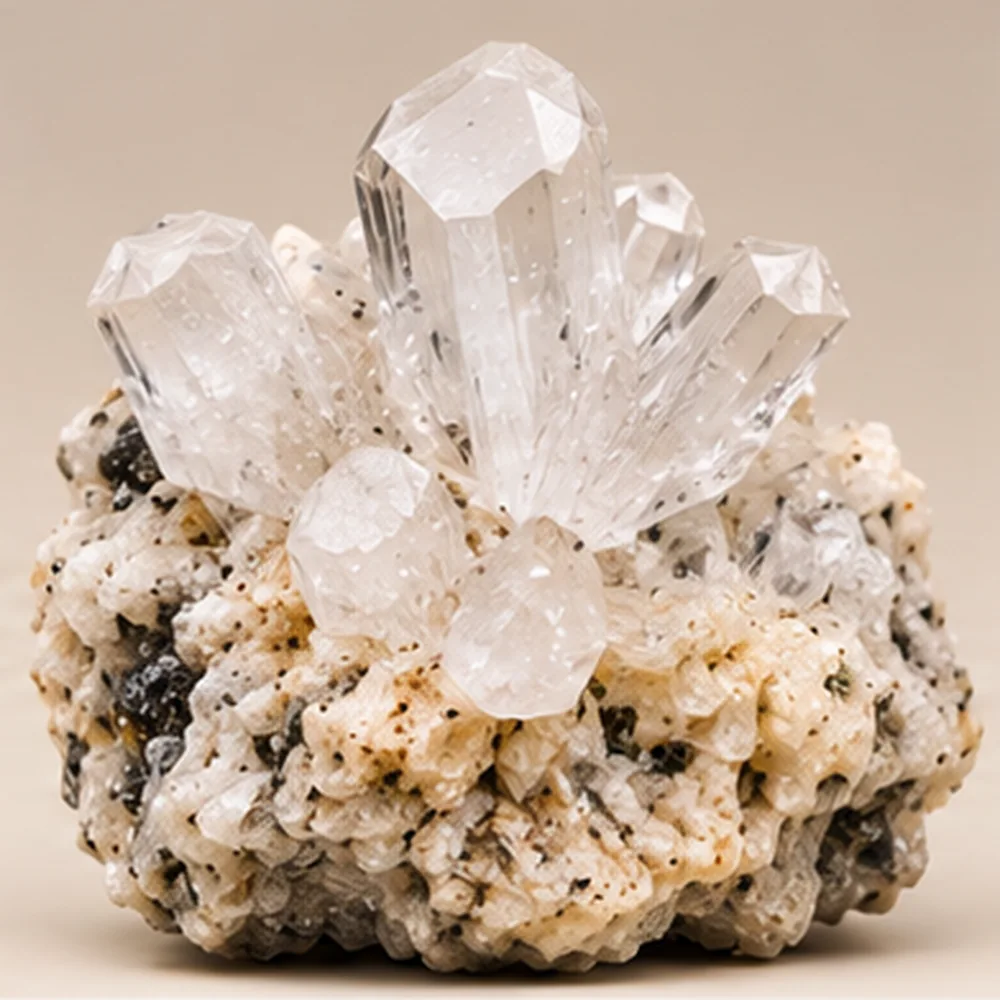 A study in colour and character
Every shade has a story.
Typical appearances for Beryllonite. Natural stones vary, and lighting or treatment can change their appearance.
Where Beryllonite is found
Sugarloaf Mountain, Stoneham, Maine, USA (type locality); other pegmatite districts
This entry describes a wider region or material without a single country attribution.
How it forms
Forms in evolved granitic pegmatites enriched in lithium, beryllium and phosphate-associated minerals
These are representative geological or commercial sources, not certified provenance for an individual stone. Country of origin should be substantiated independently when relevant to value.
01 / THE GEM AT A GLANCE
What is Beryllonite?
Beryllonite is anhydrous sodium–beryllium phosphate with an ideal or representative chemical formula of NaBePO₄ and reported Mohs hardness of 5.5–6. Clear to milky tabular monoclinic crystals with flat faces, sometimes in compact pegmatite material. Known colours include Colourless, white, occasionally faintly pale yellow. Forms in evolved granitic pegmatites enriched in lithium, beryllium and phosphate-associated minerals. The reference occurrence areas include Sugarloaf Mountain, Stoneham, Maine, USA (type locality); other pegmatite districts; this does not establish the provenance of an individual specimen.
Beryllonite is anhydrous sodium–beryllium phosphate with an ideal or representative chemical formula of NaBePO₄ and reported Mohs hardness of 5.5–6. Clear to milky tabular monoclinic crystals with flat faces, sometimes in compact pegmatite material. Known colours include Colourless, white, occasionally faintly pale yellow. Forms in evolved granitic pegmatites enriched in lithium, beryllium and phosphate-associated minerals. The reference occurrence areas include Sugarloaf Mountain, Stoneham, Maine, USA (type locality); other pegmatite districts; this does not establish the provenance of an individual specimen. Collectors chiefly distinguish Beryllonite by its documented mineral structure, appearance and geological context rather than by a trade label or colour alone. Its glassy pale appearance is not enough for identification. Verify crystal habit, cleavage and lab data before calling a clear pegmatite crystal beryllonite. In any case, look at a scale photograph, close-up of terminations, back of the specimen and matrix before comparing its quality or asking price. For an informed purchase, request the precise species name, dimensions, mass, any locality documentation and clear disclosure of repairs, coatings or stabilisation. Common comparison minerals include quartz, albite, phenakite; visual similarity is never conclusive analytical proof. Seller claims about treatment or origin should be supported by evidence rather than copied between listings. A Mohs rating of 5.5–6 describes scratch resistance, not fracture toughness or resistance to impact. A specialty gem and mineral material, but cleavage and rarity make protective settings essential. The most cautious home-care advice is: Dry-clean gently and avoid impacts, ultrasonic devices, steam and untested chemicals. Contains beryllium. Avoid sawing, sanding, drilling, inhaling dust or using any fragments in food, water or skincare products. Mineral specimens are scientific collectibles; no therapeutic or medical effects are established by their appearance or chemical composition. Described and named by Edward S. Dana in 1888 for its beryllium content. Its perfect cleavage can make a relatively hard crystal unexpectedly vulnerable to blows.
02 / LOOK CLOSER
Colour, appearance and quality
Collectors chiefly distinguish Beryllonite by its documented mineral structure, appearance and geological context rather than by a trade label or colour alone. Its glassy pale appearance is not enough for identification. Verify crystal habit, cleavage and lab data before calling a clear pegmatite crystal beryllonite. In any case, look at a scale photograph, close-up of terminations, back of the specimen and matrix before comparing its quality or asking price.
Before you choose a stone
Compare images taken in more than one lighting condition, ask for views of the actual item and check how the cut and setting change its appearance. A gemstone type is not a standard grade: each natural specimen has its own colour, inclusions and workmanship.
THE GEMHOOD BUYER'S FIELD NOTES
How to choose Beryllonite: three checks
- 01
Its glassy pale appearance is not enough for identification. Verify crystal habit, cleavage and lab data before calling a clear pegmatite crystal beryllonite.
- 02
Examine all sides of the actual item, crystal damage, repairs, precise size and any claimed mining documentation. Compare against quartz, albite, phenakite when appropriate.
Contains beryllium. Avoid sawing, sanding, drilling, inhaling dust or using any fragments in food, water or skincare products.
A specialty gem and mineral material, but cleavage and rarity make protective settings essential.
These notes describe typical gem material and trade practices. They do not independently grade or identify a specific item offered for sale.
03 / BUY WITH CONFIDENCE
Natural, laboratory-grown, treated or imitation?
For an informed purchase, request the precise species name, dimensions, mass, any locality documentation and clear disclosure of repairs, coatings or stabilisation. Common comparison minerals include quartz, albite, phenakite; visual similarity is never conclusive analytical proof. Seller claims about treatment or origin should be supported by evidence rather than copied between listings.
These distinctions should be clear in the listing for any particular gem. Treatments are not automatically unacceptable, but an undisclosed treatment, vague mineral identity or unsupported origin claim prevents an informed purchase. Where material identity materially affects value, an independent gemological identification report may be worth considering.
A CLOSER LOOK
Chemical formula and mineral classification
Beryllonite is anhydrous sodium–beryllium phosphate with an ideal or representative chemical formula of NaBePO₄ and reported Mohs hardness of 5.5–6. Clear to milky tabular monoclinic crystals with flat faces, sometimes in compact pegmatite material. Known colours include Colourless, white, occasionally faintly pale yellow. Forms in evolved granitic pegmatites enriched in lithium, beryllium and phosphate-associated minerals. The reference occurrence areas include Sugarloaf Mountain, Stoneham, Maine, USA (type locality); other pegmatite districts; this does not establish the provenance of an individual specimen.
The chemical shorthand NaBePO₄ is the ideal composition used in classification; real pieces can contain substitutions, associated minerals or multiple growth stages. Record the actual context of each sample instead of implying that one chemical formula alone guarantees its visual identity.
A CLOSER LOOK
Crystal habit, colour and surface detail
Clear to milky tabular monoclinic crystals with flat faces, sometimes in compact pegmatite material. Its range of recorded colours includes Colourless, white, occasionally faintly pale yellow. Its perfect cleavage can make a relatively hard crystal unexpectedly vulnerable to blows.
Colour depends on the particular specimen, lighting and matrix. Ask for neutral daylight images and a macro shot showing crystal tips or aggregates; catalogue illustrations show a possible appearance, not a specimen-specific identification.
A CLOSER LOOK
Where the mineral forms
Forms in evolved granitic pegmatites enriched in lithium, beryllium and phosphate-associated minerals. Well-documented reported occurrences include Sugarloaf Mountain, Stoneham, Maine, USA (type locality); other pegmatite districts.
A seller's stated mining country is not a chain of custody. Localities can be broad districts and historic labels may be inaccurate. Preserve old labels, invoices and field documentation separately from image-based guesses.
A CLOSER LOOK
How to identify the real species
Its glassy pale appearance is not enough for identification. Verify crystal habit, cleavage and lab data before calling a clear pegmatite crystal beryllonite.
Potential lookalikes include quartz, albite, phenakite. Neither a bright colour nor the seller's common name is sufficient to exclude those materials. If the species matters to a high-value acquisition, use competent analytical testing or a reliable historical label.
A CLOSER LOOK
Hardness, cleavage and handling
Beryllonite is commonly given Mohs hardness 5.5–6; this is relative resistance to scratching. A specialty gem and mineral material, but cleavage and rarity make protective settings essential.
Crystal tips, cleavage faces, layered zones and fibrous growth can break at much lower forces than the hardness number suggests. A protective display box and fully supported base are sensible even for specimens that seem solid.
A CLOSER LOOK
Buying checklist and authenticity
For an informed purchase, request the precise species name, dimensions, mass, any locality documentation and clear disclosure of repairs, coatings or stabilisation. Common comparison minerals include quartz, albite, phenakite; visual similarity is never conclusive analytical proof. Seller claims about treatment or origin should be supported by evidence rather than copied between listings.
Consider asking for an object-specific video under neutral lighting, exact dimensions and a photograph of any repairs. Do not pay a provenance premium without documentary support. Compare the quality of the actual specimen, not generic photos or generated artwork.
A CLOSER LOOK
Storage, cleaning and health precautions
Dry-clean gently and avoid impacts, ultrasonic devices, steam and untested chemicals. Contains beryllium. Avoid sawing, sanding, drilling, inhaling dust or using any fragments in food, water or skincare products.
Limit dust generation and friction; clean hands after handling; avoid drinking-water infusions, self-experimentation or medical claims. Confirm any specialised conservation method with a qualified mineral curator, particularly for reactive, toxic or fibrous material.
A CLOSER LOOK
History, collecting context and further study
Described and named by Edward S. Dana in 1888 for its beryllium content. Its perfect cleavage can make a relatively hard crystal unexpectedly vulnerable to blows.
The principal mineralogical data source is Mindat (https://www.mindat.org/min-644.html). Cross-check changing locality attributions, formulas and related-species distinctions with published mineralogical references before using a listing description as a formal identification.
04 / WEAR IT WELL
Beryllonite in jewellery
A specialty gem and mineral material, but cleavage and rarity make protective settings essential.
05 / MAKE IT LAST
How to care for Beryllonite
A Mohs rating of 5.5–6 describes scratch resistance, not fracture toughness or resistance to impact. A specialty gem and mineral material, but cleavage and rarity make protective settings essential. The most cautious home-care advice is: Dry-clean gently and avoid impacts, ultrasonic devices, steam and untested chemicals. Contains beryllium. Avoid sawing, sanding, drilling, inhaling dust or using any fragments in food, water or skincare products. Mineral specimens are scientific collectibles; no therapeutic or medical effects are established by their appearance or chemical composition.
One essential care distinction
Mohs hardness describes resistance to scratching, not resistance to breaking. Gemstones with cleavage, existing fractures, porous surfaces or fillings can need extra care regardless of their hardness number. If you do not know whether a piece has been treated, begin with the gentlest appropriate cleaning method.
06 / CULTURE & MEANING
History, heritage and symbolism
Described and named by Edward S. Dana in 1888 for its beryllium content.
Traditional meanings and spiritual associations are part of cultural storytelling. They are not evidence that a gemstone diagnoses, prevents or treats any medical condition.
GOOD QUESTIONS, CLEAR ANSWERS
Beryllonite FAQs
What is Beryllonite?
Beryllonite is anhydrous sodium–beryllium phosphate with formula NaBePO₄; it is collected for its natural occurrence and crystal forms.
What colour is Beryllonite?
Reported colours include colourless, white, occasionally faintly pale yellow. Individual examples can vary widely.
What is the Mohs hardness of Beryllonite?
Reference hardness is 5.5–6. This measures scratch resistance, not toughness.
Where does Beryllonite occur?
Representative reported areas include Sugarloaf Mountain, Stoneham, Maine, USA (type locality); other pegmatite districts; this is not proof of a specific object's origin.
How can I identify Beryllonite?
Its glassy pale appearance is not enough for identification. Verify crystal habit, cleavage and lab data before calling a clear pegmatite crystal beryllonite.
What minerals can be mistaken for Beryllonite?
Common lookalikes include quartz, albite, phenakite; confirm important distinctions with suitable mineralogical tests.
Is Beryllonite suitable for everyday jewelry?
A specialty gem and mineral material, but cleavage and rarity make protective settings essential.
How should I clean Beryllonite?
Dry-clean gently and avoid impacts, ultrasonic devices, steam and untested chemicals.
Is Beryllonite safe to handle?
Contains beryllium. Avoid sawing, sanding, drilling, inhaling dust or using any fragments in food, water or skincare products.
Are the GemHood Beryllonite images real specimen photographs?
No. The v6.0 image is an original educational illustration and does not authenticate a specimen or its source locality.
A NOTE FROM THE GEMHOOD EDITORIAL DESK
How to use this guide
We explain gemstone properties, known mining regions and customary treatments to help you shop more confidently. Each gemstone can vary in quality and individual provenance, so compare the actual jewellery listing and request supporting documentation if origin, treatment or natural-versus-laboratory-grown status affects your choice.
Our gemstone library is educational and does not act as a laboratory identification certificate. Independent gemological assessment is advisable for valuable or disputed claims.
EDITORIAL REFERENCES
Research and further reading
References describe mineral species and representative occurrences, not verification of any individual item for sale.
No matching jewellery is currently in stock. Explore the guide or browse our full collection.
Browse jewellery →UNDERSTAND THE DIFFERENCE
Compare Beryllonite with similar gemstones
These stones can overlap in colour, appearance or jewellery use. The mineral identity, treatments and durability may be very different.
KEEP EXPLORING
Other gemstones to discover
Educational articles describe gemstone types and common trade practices. They are not individual gemological certificates, current price appraisals or medical advice.